
 ENG
ENG
 English
 русский
 Français
 Español
OEM.NO: 12617543091126175480621261756772212617607909
See Details
REQUEST A QUOTE
How Does an Air Flow Meter Work?
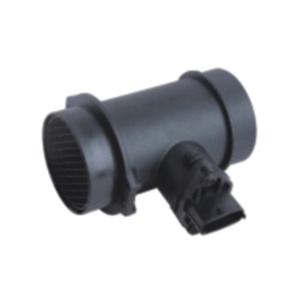
An Air Flow Meter is an essential component in modern internal combustion engines, especially in vehicles like cars, trucks, and motorcycles. This device measures the amount of air entering the engine, which is crucial for regulating fuel injection and engine performance. Understanding how an Air Flow Meter works is key for anyone looking to improve vehicle efficiency, performance, or troubleshoot potential issues. Let’s break down how this important component functions.
The Role of Air in Combustion
Before diving into the technical workings of an Air Flow Meter, it’s important to understand why air is so critical in an engine. Combustion engines require a precise mixture of air and fuel to create power. Too much or too little air can disrupt this balance, resulting in inefficient combustion. An Air Flow Meter helps maintain this delicate balance by measuring the amount of air that enters the engine, allowing the engine control unit (ECU) to adjust the fuel injection accordingly.
By providing real-time data, the Air Flow Meter plays a vital role in optimizing engine performance, improving fuel efficiency, and reducing emissions.
Measuring Air Flow
An Air Flow Meter uses different methods to measure the flow of air entering the engine. The good common types are the Mass Air Flow (MAF) sensor and the Volumetric Air Flow sensor. Both types operate on different principles but aim to achieve the same goal: accurately measuring the air volume.
Mass Air Flow (MAF) Sensor: This sensor measures the mass of the air entering the engine by using a heated wire or film. As air flows over the sensor, it cools the wire, which changes its resistance. The ECU then uses this change to determine the mass of the air entering the engine.
Volumetric Air Flow Sensor: This sensor measures the volume of air by calculating the velocity of the air as it passes through a sensing element. It then uses the volume and air density to determine the amount of air entering the engine.
Both types of sensors provide essential data to the ECU, which uses this information to adjust the fuel injectors to match the air intake, ensuring combustion.
The Importance of Calibration
For an Air Flow Meter to function properly, it must be calibrated accurately. The sensor must be tuned to the engine's specific needs, which can vary depending on factors like altitude, temperature, and engine design. If the Air Flow Meter is not properly calibrated, it may give incorrect readings, causing poor engine performance, increased emissions, and even engine damage over time.
This calibration ensures that the ECU receives accurate data to regulate the air-fuel ratio. Most modern Air Flow Meters are designed to self-calibrate or adjust according to specific driving conditions, but regular maintenance and cleaning are essential to keeping them working efficiently.
Air Flow Meter and Engine Control Unit (ECU)
Once the Air Flow Meter measures the incoming air, it sends this data to the Engine Control Unit (ECU). The ECU is the brain of the engine and makes real-time decisions about how much fuel should be injected into the combustion chamber based on the air flow measurements.
If the Air Flow Meter detects more air entering the engine (for instance, during acceleration), the ECU will instruct the fuel injectors to release more fuel. Conversely, if less air is detected (such as when idling), the ECU reduces the fuel flow. This dynamic process ensures that the air-fuel mixture remains at all times, improving engine efficiency and performance.
Impact on Fuel Efficiency and Emissions
An accurate Air Flow Meter can significantly affect both fuel efficiency and emissions. Since the ECU adjusts the fuel-to-air ratio based on the air flow readings, the engine burns fuel more efficiently. This leads to less wasted fuel, improved fuel economy, and reduced greenhouse gas emissions.
A malfunctioning Air Flow Meter can cause poor fuel economy, higher emissions, and engine performance problems. In some cases, the engine may run too rich (too much fuel) or too lean (too little fuel), which can cause misfires, poor acceleration, or stalling.
Related products
-
-
-
-
-
-
OEM.NO: 8200466969. 82006705338200823348. 8229041172000Q3D....
See Details

PRODUCTS
CONTACT INFO.
- +86-18057729678/+86-13587780979
- +86-577-62369668
- [email protected]
- No. 21 Xinda Road, xin'ao industrial zone, Hongqiao, Yueqing, Zhejiang, China
QR CODE
Copyright © Wenzhou Xinlianke Mold Industry Co., Ltd. All Rights Reserved.

Car Mass Air Flow Meter Manufacturer
 TOP
TOP